
Mission
Preserve raw signals
Build a national-scale archive of raw clinical neurophysiology signals, reports and metadata.
Norwegian research project
VIKING establishes secure, FAIR and reusable infrastructure for raw signal and report data from clinical neurophysiology practice — enabling research into AI-based clinical decision support systems, quality assurance and method development for neurology and clinical neurophysiology.
Build a national-scale archive of raw clinical neurophysiology signals, reports and metadata.
Develop decision-support tools for neurology and clinical neurophysiology with human oversight.
Support quality assurance, reference limits, validation studies and method development.
Work toward FAIR principles with standardized structuring of data, open formats and open source tools.
Approximate processed data currently represented in the VIKING database. Counts are public aggregate values and will be updated as conversion and indexing progresses.
Public aggregate counts by modality and data type.
*Clinician-selected NCS traces used in reports, non-selected acquisition traces are archived but excluded from the count.
EEG = Electroencephalography; EMG = Electromyography; NCS = Nerve conduction studies; EP = Evoked potentials; QST = Quantitative sensory testing.
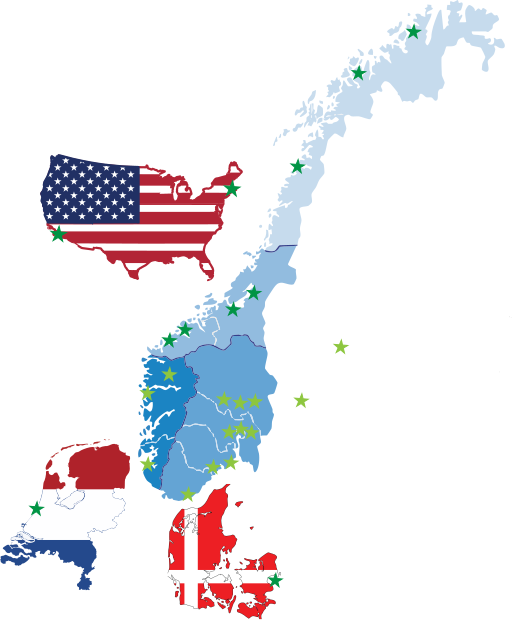
VIKING connects Norwegian clinical neurophysiology environments with selected international partners in standards, data infrastructure and AI development.
VIKING develops software and standards-aware pipelines for extraction, conversion, annotation, metadata harmonisation and downstream AI development.
VIKING develops open tools to convert proprietary EEG data to EDF+ and proprietary EMG/NCS data to waveform time-series and structured reports.
EpiCurrents supports browser-based annotation and visualisation across neurophysiology modalities for education and research.
Metadata stored in SQL, JSON and Parquet with BIDS/FAIR/EDF+ alignment and provenance tracking.
Approved joins with patient journals, national registries and laboratory codes provide metadata on diagnoses, outcomes, care-pathway and more.
Develop AI-based clinical decision support systems, novel methods, and tools for modern quality assurance and benchmarking.
Extraction of EMG and NCS waveform time-series and reports from proprietary files.
Browser-based tooling for visualisation, annotation and research workflows across neurophysiology modalities.
Batch processing and extraction of standardized reports from proprietary EMG and NCS files.
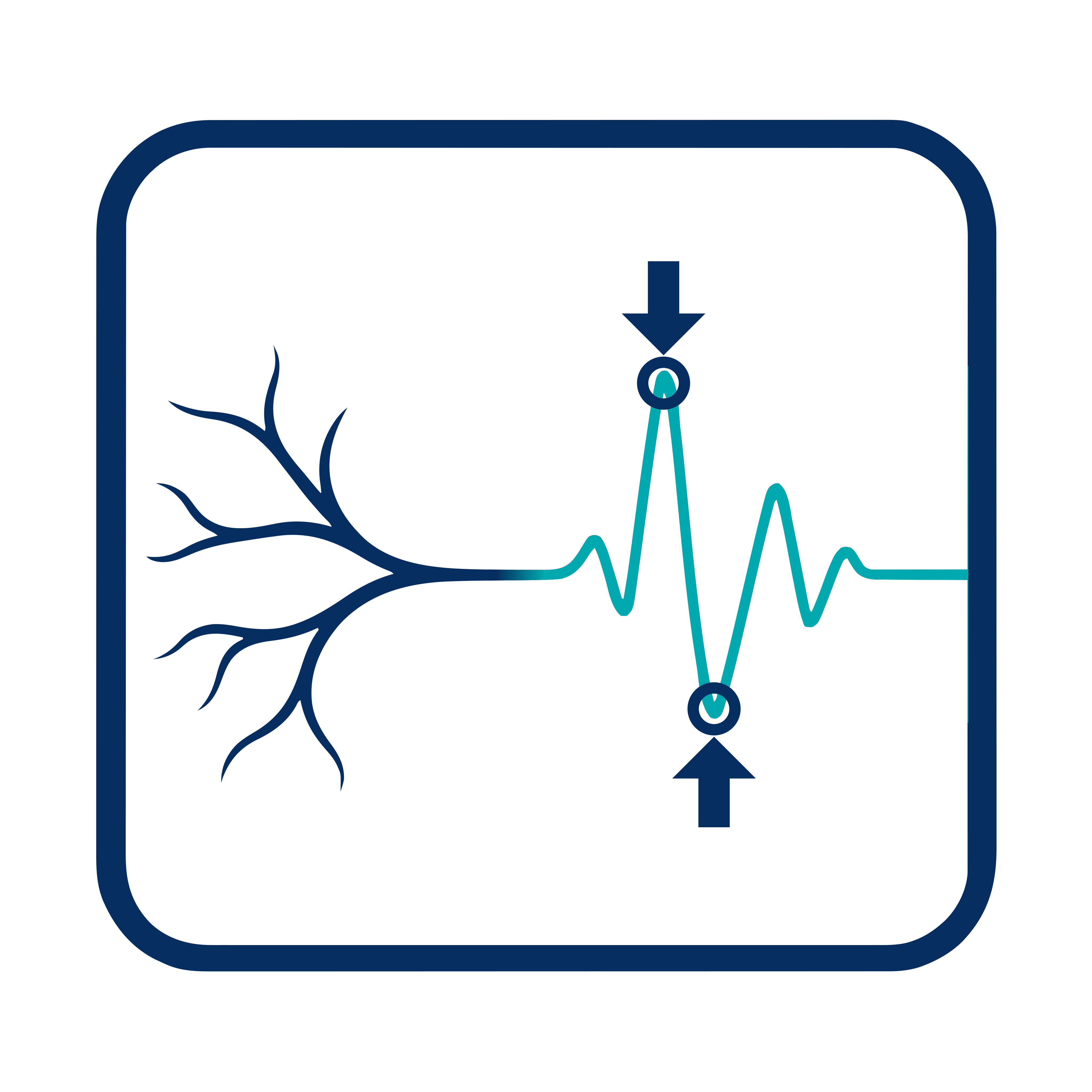
Automatic quantitative and qualitative analysis of NCS waveforms, including feature extraction and automated marker placements
Selected projects and information pages connected to VIKING infrastructure and clinical neurophysiology AI.
Advanced research on neurological outcome assessment in comatose cardiac arrest survivors using AI-enhanced EEG analysis and multimodal prognostication.
↗ENTRAPME · Postdoc projectDevelop a machine-learning based clinical decision support system for diagnosing nerve entrapments.
Developing a new device for diagnosing carpal tunnel syndrome.
Implementation research: New reference limits for nerve conduction studies at Norwegian hospitals.
↗DIGMINE · PhD projectDeveloping and validating new indirect methods to create local reference limits for nerve conduction studies.
↗DIGMINE · Postdoc projectImproved diagnostics of neurological diseases with a novel approach for obtaining normal values.
Benchmarking and quality indicators for clinical neurophysiology laboratories.
Official Oslo University Hospital research project page.
↗VIKING at OUHEnglish information page for patients and rights.
↗VIKING ved OUSNorsk informasjonsside for pasienter og rettigheter.
Clinical neurophysiology, AI engineering, software development and project leadership behind the VIKING infrastructure.

MD, PhD — PI, clinical neurophysiologist
MSc, PhD — Postdoc, senior advisor

MD, PhD — Postdoc, clinical neurophysiologist
VIKING is built for controlled reuse, validation and future method development with clinical and technical partners.
VIKING welcomes partners in clinical neurophysiology, neurology, signal processing, AI safety, data standards and open infrastructure. The project enables research into AI-based clinical decision support systems, quality assurance and method development for neurology and clinical neurophysiology. Simultaneously, our goal is to build a foundation for controlled data reuse in approved future projects, guided by FAIR principles and aligned where possible with BIDS, EDF+ interoperability, and EBRAINS collaboration.